Friday, May 31, 2019

Memorial Day Happenings

Things had gotten a little cluttered and crowded at the Temple. The plants, especially the Cattleyas had been growing rapidly. It got harder to see when new growth and roots were emerging; the ideal time for re-potting.

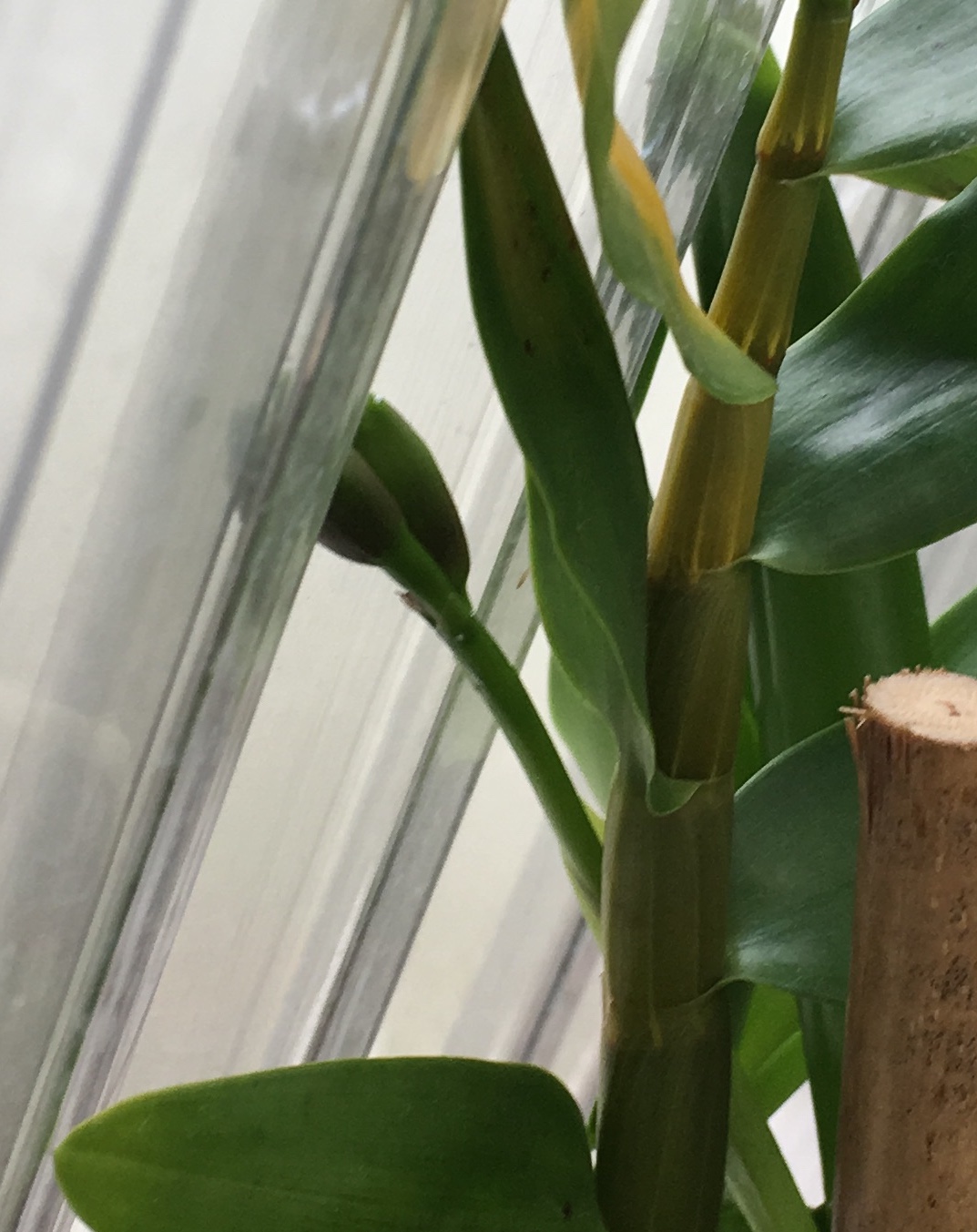
The buds of this Cattleya Forbesii are growing right into the wall. I only spotted them from the outside.

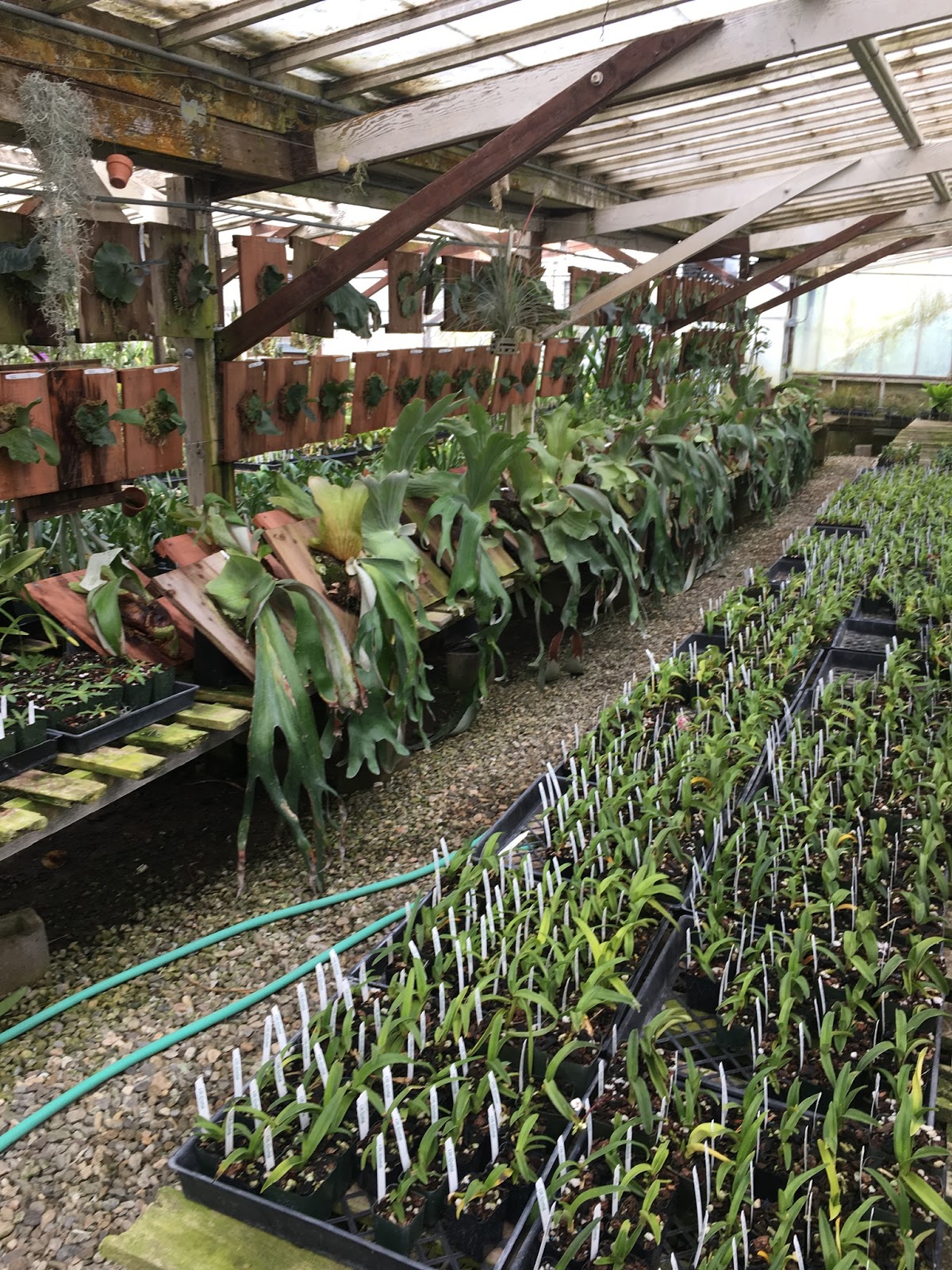
This bench in the southeast corner is very crowded. A new duplicate bench in the opposite corner will help relieve the overcrowding.

The ideal solution was to build a two-story bench in the northwest corner. This would take up the same amount of floor space, but give twice the room for plants.
Dodging thunderstorms, rare for this area, I constructed the new bench.


The recently constructed bench on the patio just before moving it into The Temple.

The new bench in place.

Close-up of Cattleya Percivaliana alba seellings with plenty of room for growth. I can now see when new roots are emerging and re-pot at the optimum time.

The bench in the opposite corner is no longer overcrowded.


I also needed a shed for potting supplies and tools. I designed one in the style of a Tiki bar, and call it "Libby's Tropical Shed." I used grass beach mats from Hawaii to cover the walls. For trim, I used split bamboo from a stand of Bambusa Oldhamii that is growing at a local business. They were kind enough to allow me to cull out the broken and dead culms. I discovered that working with bamboo is a lot of fun!
Bambusa Oldhamii growing at a local business.

I used a machete and hammer to split the bamboo.

The door to the shed has been re-purposed from three previous Temples; numbers 3, 4 and 5.


Various daylight shots of the new shed, and a night time photo with the Chinese lanterns.


Tuesday, April 23, 2019

One Year Anniversary

This May 1st will be the completion of the Temple's first year. The biggest change is the number of plants inside, mostly by division.

The newly completed Temple last year
 
A more recent photo
 
Part of learning to grow in this new environment, was finding the easiest way to cool while using the least amount of energy. This is the north wall. I have modified the left panel to include an automatic vent that opens when the temperature is over 75 degrees.


Close-up photos of the new vent and opening apparatus.
 
Trip to Cal Orchid and Santa Barbara Orchid Estates
 
On Friday, April 19th, I re-visited these two establishments. I was one of a handful of  customers at both locations, which gave me a nice opportunity to chat with the staff. Everyone at both locations made me feel very welcome.
James and Lauris Rose at Cal Orchid bought this establishment in 1987 after working at Santa Barbara Orchid Estates, where they met and eventually married. Their breeding lines of Reed-stemmed Epidendrums, begun with just five imported plants, has become world famous. It makes my entrepreneurial heart glad to see the phenomenal success of these plants, descended from just two plain species; "weeds" of the Orchid world.
 
The "Epi's" at Cal Orchid
 
James Rose was kind enough to give me a "deal" on this plant, a replacement for one I lost in one of the previous Temples. This is Guarianthe (formerly Cattleya) Skinneri 'Casa Luna.' It now hangs prominently in the Temple.
 
Phalaenopsis hybrids at Cal Orchid.
 
Various Platycerium species growing along with the Orchids at Cal Orchid.
 
I also got to meet the four-footed member of the Rose family, Rio, who is an energetic two year old Golden Lab. We wrestled briefly before his attention was diverted to other things.


I then moved on to Santa Barbara Orchid Estate, where I have been going almost 35 years.
 

I enjoyed my lunch in the tranquil picnic area. Except for the weather, I could have been anywhere in the tropics. In the background, we see large King Palms and Washingtonias.
 
Adjacent to the Picnic area, specimens of various Tillandsia species can be seen growing in baskets.
 
Another view of the Picnic area.
 
One can find many specimen sized plants in the growing area at Santa Barbara Orchid Estates.
 
Another large specimen from the Cattleya alliance. From the labels lying there, I assumed the staff was about to divide it.
 
 
A large Vanilla plant in flower inside the Phalaenopsis house.
 
Another fine specimen in flower.
 
Santa Barbara Orchid Estate was opened right after World War II. Many orchid plants had been smuggled out of war-torn Europe and brought to Santa Barbara for its favorable climate. This created a local interest in these plants, thus creating a demand. Cal Orchid also started around that time.
 
I was impressed at how closely knit the Orchid community seems there. Their local Orchid society  has put on the world famous Santa Barbara Orchid Show every year for 75 years, a monumental undertaking. Orchid societies have closed all over the country in recent years, presumably due to lack of interest. The good people of Santa Barbara are an inspiration to us all.
 
I brought several plants home with me. I will write about those as they come into flower.


My Epi's behind the statues


This is a new acquisition

 
This Guarianthe skinneri alba, from a flask I originally started in 2001.
 

Another new Epi


Saturday, March 23, 2019

Gubler Orchids

Funny how close things look on a map. When I was contemplating a trip out to Gubler Orchids, I didn't realize that I would have to drive 400 miles round trip!

Landers California, is an "unincorporated community" according to Wikipedia. It has long been reputed as a place where people get messages from extra-terrestrials. My initial impression of the place, is that it is ideal for folks who prefer their solitude, far away from any urban development. It was here that Hans Gubler moved his orchid growing operation from Los Angeles. Han's father, an immigrant from Switzerland, started selling orchids from the back of his station wagon. Han's children now run the operation. It makes my heart glad to see yet another example of  American entrepreneurism at work.

According to Chris Gubler, the desert sunlight is a major advantage to their growing operation. Even so, it was an overcast day when I arrived.


The retail sales area
Gubler supplies Lowes home center with orchid plants, and unlike other suppliers to the box stores, still labels its plants. This is mighty important to any serious orchid grower. An unlabeled or "lost label" plant cannot be used as a parent, nor entered into a judging with the American Orchid Society.
Several other visitors arrived during my stay there, including a very nice family from the San Francisco Bay area. We were part of the same tour group together through Gubler's greenhouses.


As we arrived in the first greenhouse, I noticed that the benches are arranged without walkways in between, thus maximizing growing space. Considering the booming wholesale business Gubler conducts, especially between Valentine's day and Easter, I appreciated the fact that they still allow visitors to their operation. They must employ staff just to keep the retail center open. Although I purchased a few plants for a modest fee, I didn't see that many retail sales while I was there.

Clearly, Lowe's is Gubler's retail space. They have instructional videos online for Lowe's employees to maximize retail appeal. My last visit to a Lowe's, I found a breathtaking display of color.

Gubler also hosts the Morengo Valley Orchid festival every October.


One question I got answered during my visit, was how they heat the place. They have no local piped in "gas service." The tourguide explained that they have a very large LPG tank onsite. The Phalaenopsis orchids shown here have very specific temperature requirements to induce flowering, especially in the winter months.
The desert gets quite cold, and I am sure Gubler's gas bill is a substantial part of its business costs.


Besides the heating costs, the greenhouses must be cooled during the desert's scorching summer temperatures. Gubler accomplishes this by the use of a "wet wall": a wall composed of excelsior cooler pads with recirculating water. The fans shown here are at the opposite end  of the greenhouse, and pull the humidified air through  the wet wall. The water recirculating system for the wet wall was something to behold in operation, even on a cool day.


In addition to heating and cooling, Gubler has developed induced flowering cycles to a fine art over the many years they have been growing. This is an example of their use of shading. The flowering cycles must coincide with peak retail demands; either too early or too late meaning possible loss of sales.


In addition to the many Phalaenopsis shown here, Gubler has some nice looking Cattleyas and Dendrobiums. They also specialize in Carnivorous plants, such as Nepenthes.
A visit to Gubler's is worth the trip. I also heartily recommend purchasing their plants at your nearest Lowe's.


Monday, March 18, 2019

The Santa Barbara Orchid Show

Early Sunday morning, I stepped aboard an Orange Belt bus to the Santa Barbara Orchid Show. According to Judy, the hostess that morning, their company started this excursion several years ago after I suggested it. This was my first trip on their line. Judy, a dear friend for many years, and Shelly the driver were a class act. I recommend Orange Belt Tours very highly.

We arrived at the Earl Warren Showgrounds on a very warm day. Bypassing the crowded parking lot, we were admitted to the show from a rear entrance just steps away from the main exhibit hall.


A unique local vehicle


I LOVE the new mini Reedstem Epidendrum hybrids


Norman's Orchids of Montclair, California won a prize for his display


This Bulbophyllum Phaelenopsis is an orchid grown for it's foliage as much as it's flowers.


Sunset Valley Orchids and their award-winning display.


As usual, no photo can capture the real thing adequately. Fragrance also wafted through the main exhibit hall.

One of the benefits of serious Orchid shows are the lectures and classes one may attend.


I know people who spend days at these events. I am  personally spent after a few hours. The colors and fragrances can overwhelm the senses.
After seeing the displays, I visited the plant sales area, where I renewed old acquaintances with Steve from Floralia Orchids of Brazil, and Sheldon from Carmela Orchids of Hilo, Hawaii. I also met the staff of Sunset Valley Orchids and Andy's Orchids for the first time.
Naturally, I brought a few plants home. I was especially pleased to purchase two forms of Laelia Purpurata from Floralia. This species is the national flower of Brazil. 
Sunset Valley Orchids had some lovely miniature Cattleyas in wild colors. Hybridizers today are attempting crosses that produce abundant large flowers on small plants; mighty important in today's world of high energy costs associated with the greenhouse.
After lunch at the Santa Barbara Fish house, which I highly recommend, our group headed home.
The day was thoroughly enjoyable. I plan to make it a yearly event on the bus from now on.